

Main idea:
To guide the discussion on how individuals can maintain inner peace, purpose, and moral clarity while navigating ethical uncertainty, digital pressures, and changing social norms in an increasingly complex world.
Important points:
Important points:
- Navigating Moral Ambiguity:
Highlighted the need to examine how moral uncertainty directly contributes to psychological distress, inner conflicts, and a loss of personal well-being. - Impact of External Pressures:
Emphasized looking into how cultures, modern media, digital technologies, and social expectations actively shape or distort our ethical decision-making. - The Role of Support Systems:
Pointed out the essential role that education, spirituality, and community support play in helping individuals build moral resilience and reclaim a core sense of purpose.

Main idea:
To advocate for a shift from fragmented, dualistic thinking into a unified global ethics framework ("first philosophy") where humanity recognizes that all diverse cultures and spiritual traditions share a single, interconnected source of being.
Important points:
Important points:
- The Trap of Duality and Silos:
Elaborated that treating scriptures, worldviews, and religions as isolated "silos" (e.g., separating the Buddha from Christ or Allah) creates a binary "us versus them" mentality that cuts humans off from deep dialogue. - The Code of the Infinite ($Unum\ e\ Pluribus$):
Explained that what is "first" is an infinite, interconnected field where unity and boundless diversity coexist, acting as the foundational ground floor for compassion and the moral law. - Conduct of Mind Over Behavior:
Argued that ethics is not just external actions but is determined by the quality of consciousness; true ethics requires shifting from a predicative, objectifying mind to a meditative, mindful flow. - Call for Gen Z to Become "Zenji":
Suggested that the younger generation must practice deep mindfulness to discover common ground and build a more perfect, harmonious society out of linear fragmentation.
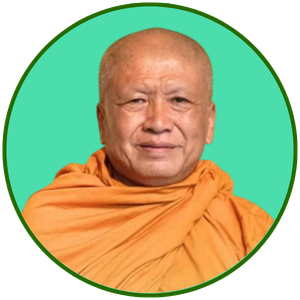
Main idea:
To explain that modern education alone is insufficient for human fulfillment, meaning that philosophy and spiritual practice must be integrated to awaken inner awareness, wisdom, and compassion.
Important points:
Important points:
- Limitations of Modern Education:
Observed that while current schooling excels at teaching material success, competition, and technical skills, it severely neglects inner development, leaving individuals feeling empty and morally confused. - Philosophy as Critical Reflection:
Stated that philosophy invites deep questioning about what constitutes a meaningful life, helping people think critically beyond blind fear and social conditioning. - Spiritual Practice Trains the Mind:
Elated that mindfulness and meditation provide stability by training individuals to observe their minds, making them less reactive to anger and more capable of responding with genuine loving-kindness. - The Root of Modern Crisis:
Identified inner disconnection—from oneself, nature, and others—as the root cause of societal issues like polarization, greed, and environmental destruction.
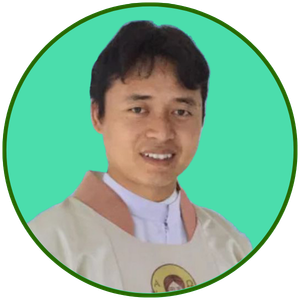
Main idea:
To present the Christian perspective that true moral clarity and inner peace are achieved by aligning human actions with the goodness of God and pursuing truth through interfaith dialogue.
Important points:
Important points:
- Alignment with Divine Goodness:
Explained that for Christians, morality is not blurred when aligned with God, and acting in accordance with His goodness allows a person's capacity for understanding humanity to grow. - Systematic Frameworks for Truth:
Noted that incorporating classical philosophical traditions (Plato, Aristotle, Socrates) alongside theological training helps individuals better comprehend human nature. - Overcoming Blur Morality via Knowledge:
Expressed that ongoing improvements in educational systems and interfaith dialogues serve as key tools to guide individuals toward absolute reality and truth, dissolving moral confusion.

Main idea:
To illustrate, through the lens of art and geometry, that clear ethical rules are not restrictive cages but are necessary foundations that hold the inner human structure together against chaotic societal noise.
Important points:
Important points:
- The Canvas of Confusion:
Compared the modern mind to a messy, chaotic painting filled with 24/7 noise from social media, where rapidly shifting rules steadily erode a person's inner peace. - Lessons from Islamic Geometry:
Shared that the infinite beauty of geometric design does not come from drawing lines at random, but from strict adherence to highly accurate center points and precise, underlying rules. - Morality as Scaffolding:
Argued against extreme personal freedom without a moral center, stating that ethics serve as the scaffolding that keeps the human soul structurally sound. - The Three-Step Mindset of a Craftsman: Outlined a process to redesign one's life:
Decode the external noise to find your truth, Deconstruct toxic values or bad habits, and Design/Develop a moral center rooted daily in kindness, honesty, and respect.

Main idea:
To challenge the idea that morality is naturally "blurred," asserting instead that it is intentionally obscured for self-serving interests, and proposing a radically simplified, universal morality based strictly on non-violation and compassion.
Important points:
Important points:
- The Danger of "Religionism":
Warned that dogmatic religion can create historical conflicts and an "us versus them" mentality, placing one's own group as the "good guys" over others, as seen in modern global geopolitical conflicts. - The Cruelty of Homo Sapiens:
Commented as a scholar and scientist that humans can be among the cruelest species, often institutionalizing violence and mass destruction unless a deep spiritual paradigm shift alters our inner nature. - Universal Morality via De-emphasizing the Creator:
Proposed removing specific divine commandments to focus entirely on universal, actionable rules shared across faiths: do not kill, do not commit adultery, do not steal, and do not lie. - The Rule of Non-Violation:
Collapsed all moral principles into a single, straightforward law: do not violate others, equating this unblurred morality directly with empathy and compassion. - The "CAKE" Solution: Created a playful, memorable acronym for spiritual liberation and world peace, urging individuals to internalize Compassion, Altruism, Kindness, and Empathy to expand their internal circle of love.